
In food and drinks manufacturing, the decision is made on the line. The cost shows up in the cash position.
Armqu simulates what a production run, a retail order, or a supplier payment does to your margin and 90-day cash, across fresh and processed lines, before you commit.
The problem in F&B
A buyer at a national chain moves a promotion forward by two weeks and wants the volume to match. To hit it, you bring a production run forward, draw down ingredients you were holding for a different SKU, and stretch a supplier to keep cash where it needs to be.
Each of those is a sound call on its own. Together, on perishable stock with payment cycles that do not line up, they are a cash decision disguised as a scheduling one. And the person who can see the schedule is not the person who can see the cash.
The unseen consequences
Fresh ingredients pulled forward age on a 14-day clock while the receivable they were meant to cover sits on 60.
The SKU you borrowed stock from now risks a short, and the shortage surfaces a week into the run.
The stretched supplier triggers a credit hold, and the next raw material order is blocked before procurement notices.
The promotion ships, the margin is thinner than the model said, and nobody reconciles why until month-end.
The cash dip lands weeks after the decision, when the terms that caused it can no longer be renegotiated.
Three forces compressing your margins at the same time
Costs rise, terms tighten
Raw material and labour costs keep rising. Retailer consolidation tightens the terms producers are offered. There is no slack left in the margin to absorb a cross-functional call made on incomplete data.
Volumes flat, margin gone
Prices carry what little growth there is; volumes are flat. A decision that takes three days and lands wrong is no longer just slow. On a thin margin, repeated across a week of operations, it is the margin.
The window is closing
The producers who close this gap in the next year hold a cost advantage the rest cannot quickly recover. This is structural, not cyclical.

Most common decisions you have to take - Armqu has the answer
Armqu reads your live floor data and your finance data together, so when you ask whether to accept that promotion, it already knows what pulling the run forward does to your 14-day fresh stock, your 60-day receivable, and your supplier credit line.
And returns one cash and margin answer.
Accept a retail order
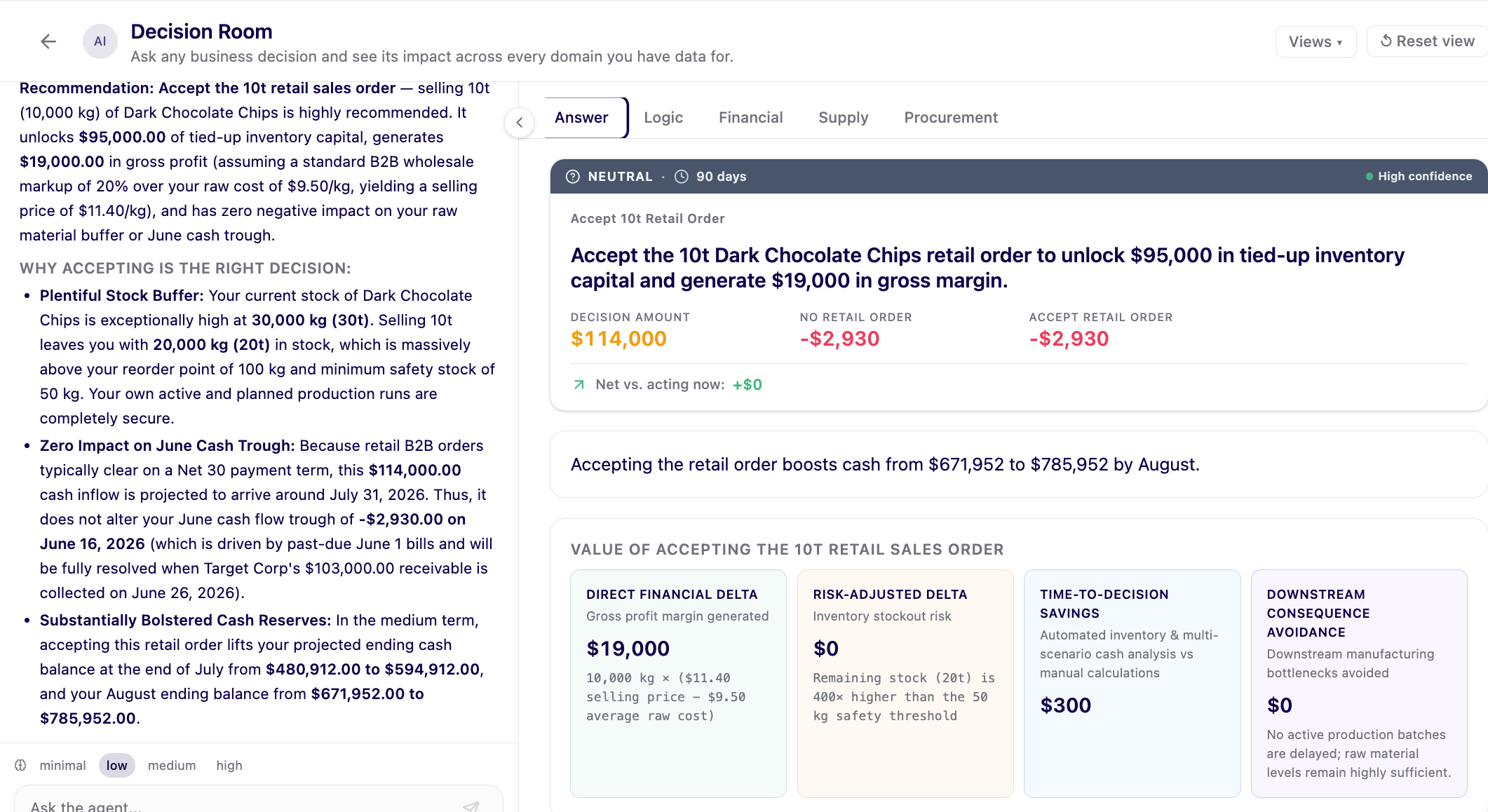
A chain doubles the order against stock that has nine days of shelf life. Armqu runs it against live capacity and 90-day working capital before you sign, not after.
Ingredient price change or substitution margin modelling
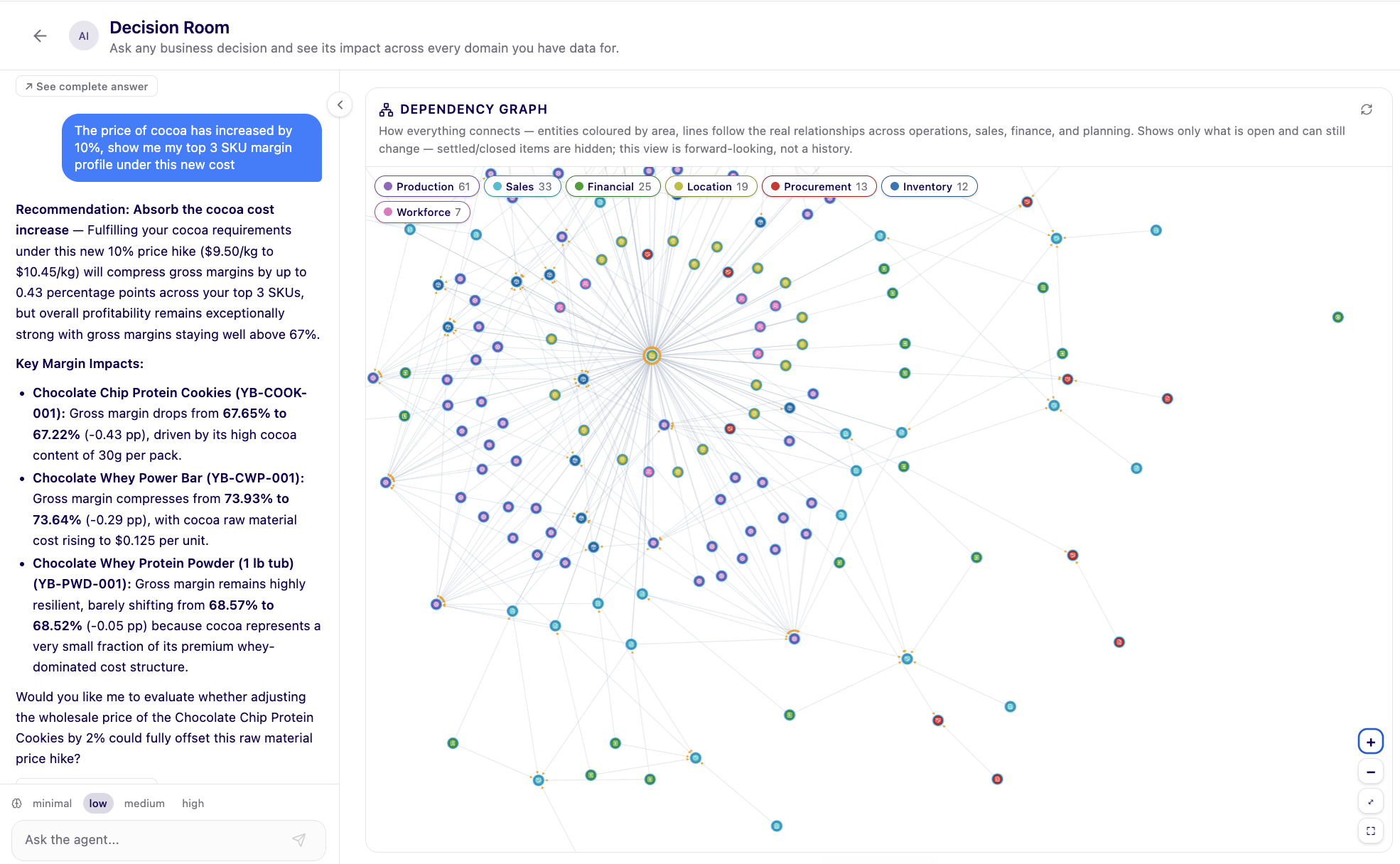
A cocoa price spike forces a switch to an alternative source or formulation. Armqu models what the substitution does to margin at SKU level, across every affected line, before you commit to the change, so you see which products tip below target and which contracts no longer cover their cost.
Supplier payment timing across mismatched cycles
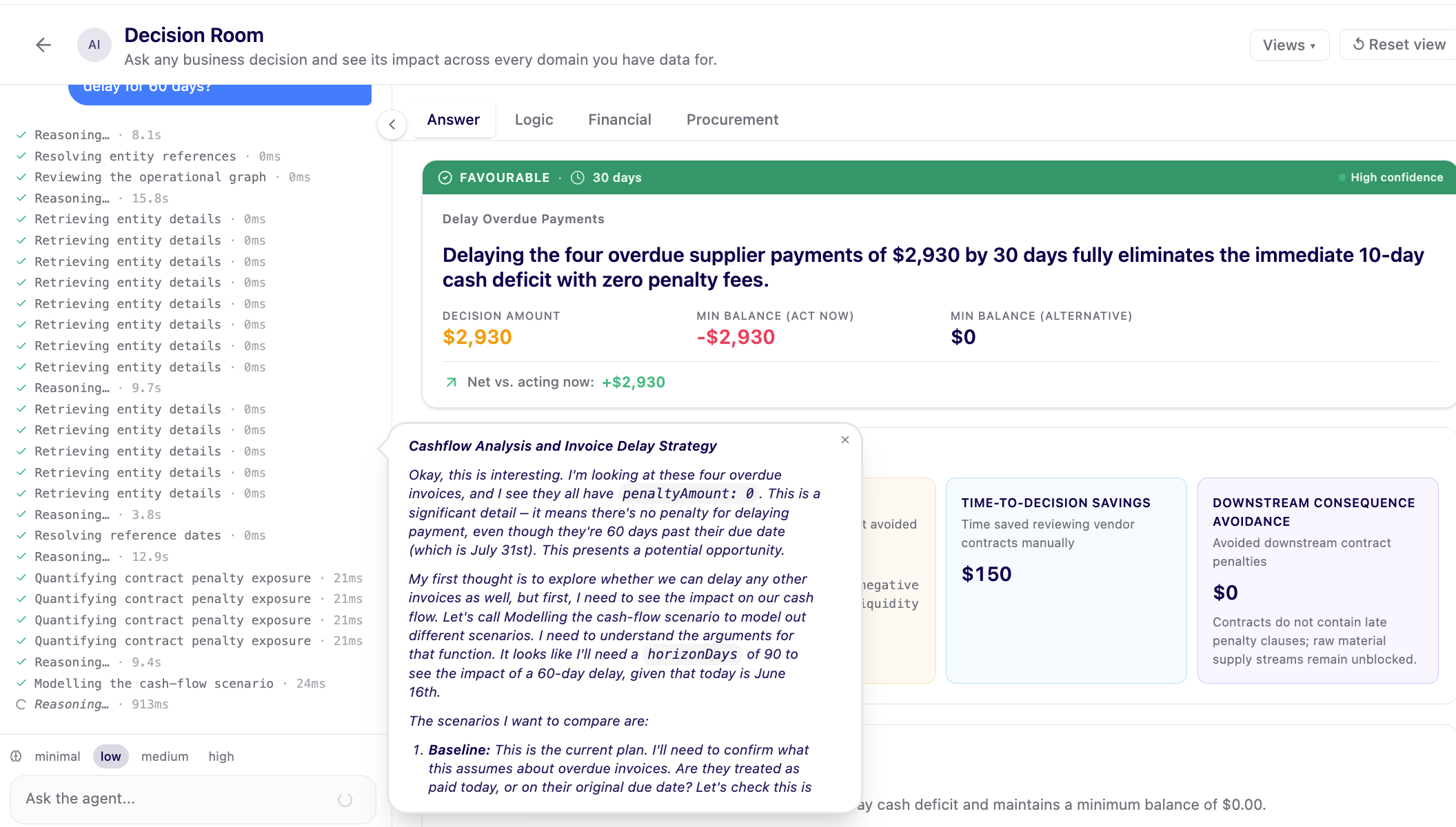
Fresh lines settle in 14 days, processed in 45 to 90. Armqu models the combined cash position before you prioritise a payment, so a penalty clause does not trigger unseen costs.
Inventory write-off exposure
Slow-moving stock ages toward the write-off window. Armqu surfaces the cash exposure continuously, before the loss is booked rather than after.
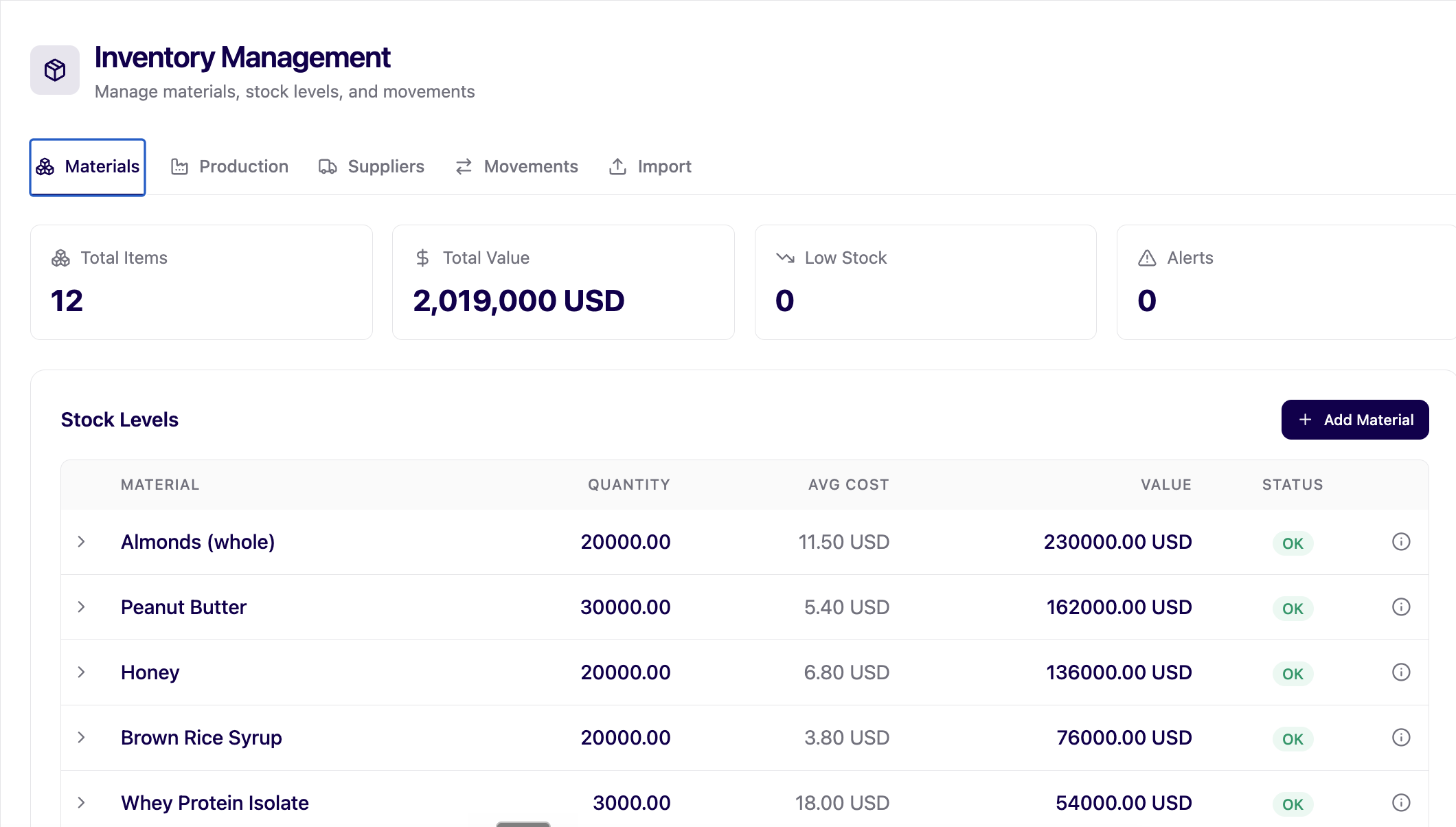
See the platform capabilities for F&B manufacturers
Haven’t we tried this before?
-
Yes. Armqu is built for mid-market producers running an ERP and operational systems but planning major decisions in spreadsheets. Your team does not build or configure it; our floor-mapping team does, and you are live in 4 to 6 weeks.
-
Your data is organised into an isolated model built for your operation at setup; the AI works from structured summaries, never your raw data, and your data never trains any shared model. Every answer carries full provenance so you can see exactly what it was based on.
Book a demo. We'll model a real decision from your business, before you commit to anything.
The next decision your team makes without a model will cost you something. Book a 30-minute walkthrough – we’ll take a real decision from your business, model it live, and show you what the numbers would have said – before you commit to anything.
FAQs:
-
It models each line on its real payment and shelf-life cycle rather than a single average. Fresh stock on short cycles and processed stock on longer terms are simulated as one combined cash position, so a decision touching both shows its true effect before you commit.
-
Yes. When a buyer requests a promotional price, Armqu runs the P&L against your live input costs at SKU level, so you respond knowing the real margin rather than one from a costing model that is months old.
-
It surfaces slow-moving and aging stock continuously, flagging the cash exposure before the write-off window closes rather than after the loss is booked. The exposure is shown in cash terms, not just units on a shelf.
-
Forecasting tools project finance data on its own. Armqu simulates the financial consequence of an operational decision using live factory and ERP data at the same moment, connecting the production call to the cash position, which a finance-only tool cannot see.
-
Yes. Armqu runs the order against your live stock, capacity, and 90-day working capital and shows what fulfilling it does to cash and margin, before you accept rather than after.